Luis Camnitzer
-
Biography
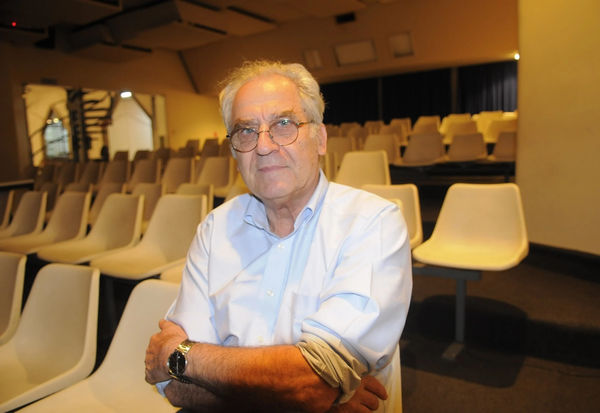
 Luis Camnitzer, 2018. Photo: Ross Collab
Luis Camnitzer (b.1937) is a German-born Uruguayan artist, educator, and writer who moved to New York in 1964. He was at the vanguard of 1960s Conceptualism, working primarily in printmaking, sculpture, and installations. For more than five decades, his practice has been marked by an enduring interrogation of systems of power, the intersection of art and pedagogy, and the deconstruction of language and other familiar frameworks.
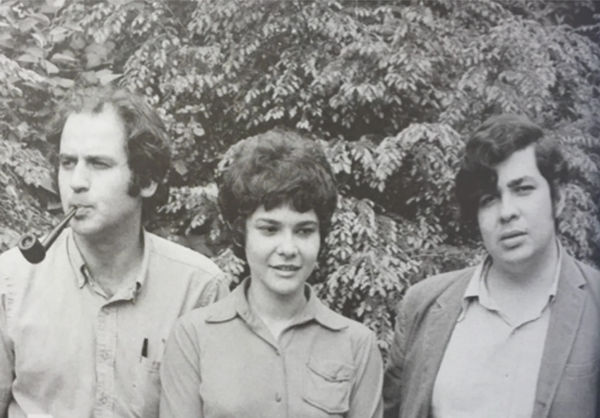
In 1964, Camnitzer co-founded The New York Graphic Workshop, along with Liliana Porter and José Guillermo Castillo. They probed the social impact and theoretical possibilities of printmaking by defying its traditional limitations. The workshop’s innovative propositions, including three-dimensional prints and an exhibition staged through the mail, epitomize the irreverence and social efficacy unifying Camnitzer’s diverse body of work.
Language has been a key subject of inquiry for Camnitzer since 1966. His juxtapositions of text and image in various media expose the fallibility of both representational systems. Early prints annotated with the procedures of their own production characterize his biting wit. As do his recurrent subversions of individual authorship and his scrutiny of the discrete art object and its commercial value. As Camnitzer’s interest in the polysemy of representational systems unfolded, so did his aim to express socio-political concerns through his art—especially in his rebuke of military regimes taking power in Latin America and the fraught political landscape of his adopted country, the United States.
The wooden Object Boxes that Camnitzer began constructing in the early 1970s typify his investigation of the relationship between language and image. Objects, drawings, and found images are contained between glass panes and accompanied by brass plates bearing evocative yet enigmatic texts. Rather than definitive explanations of the contents, the correlation of text to object or image is an extemporaneous construct, an indeterminate narrative meant to be formed by the viewer.
Camnitzer’s work frequently beckons the subjectivity of the spectator through discursive, interactive, and participatory propositions that reveal his dedication to pedagogy. As an educator, he has advocated since the 1960s for the need for art to transcend the boundaries of its conventional parameters and establishments. That conviction is the basis of A Museum Is a School, a touring site-specific installation displayed on the exterior of various arts institutions since 2009. By emphatically re-defining the museum, Camnitzer re-contextualizes the work housed inside. Under his proposal, art becomes a dynamic process rather than a product, a means of acquiring and developing knowledge; the museum becomes a forum for exchange; the artist becomes a facilitator rather than an authority. Camnitzer’s commitment to involving the public in this creative process reflects his role as a progenitor of process-oriented art, his abiding commitment to institutional critique, and his lifelong conviction in art’s transformative function.
Retrospectives of Camnitzer’s work have been presented at El Museo Nacional Centro de Arte Reina Sofía, Madrid, Spain (2018); Museo de Arte de la Universidad Nacional de Colombia, Bogotá (2012); El Museo del Barrio, New York, NY (2011); Kunsthalle zu Kiel, Germany (2003); and Lehman College Art Gallery, Bronx, NY (1991). The artist’s work has been the subject of solo exhibitions at Centre del Carme de Cultura Contemporània, València, Spain (20242); El Museo de la Memoria y los Derechos Humanos, Santiago, Chile (2013); Kemper Art Museum, St. Louis, MO (2011); Daros Latinamerica, Zürich, Switzerland (2010); and El Museo del Barrio, New York, NY (1995), among others. His work has been included in many group exhibitions, including HOME—So Different, So Appealing, Los Angeles County Museum of Art, CA, traveled to Museum of Fine Arts, Houston, TX (2017); Under the Same Sun: Art from Latin America Today, Solomon R. Guggenheim Museum, New York, NY (2014); and Information, The Museum of Modern Art, New York, NY (1970). He has participated in several international biennials, including Documenta 11, Kassel, Germany (2002); Whitney Biennial, New York, NY (2000); and Pavilion of Uruguay, 43rd Venice Biennale, Italy (1988). Camnitzer’s work is represented in the collections of the Art Institute of Chicago, IL; Centre Pompidou, Paris, France; The Metropolitan Museum of Art, New York, NY; The Museum of Modern Art, New York, NY; São Paulo Museum of Art, Brazil; Solomon R. Guggenheim Museum, New York, NY; Tate Modern, London, United Kingdom; Walker Art Center, Minneapolis, MN; and Whitney Museum of American Art, New York, NY, among others. His honors include the Figari Prize 2025, and the Guggenheim Fellowship in 1982 and 1961. From 1969–2000, he taught at the State University of New York (SUNY) College at Old Westbury and is professor emeritus.
-
Select Works
-
Exhibitions
-
Luis Camnitzer
Alteration of the World (1967–78) November 3, 2023 - January 28, 2024 GermantownAlexander Gray Associates, Germantown presents Luis Camnitzer: Alteration of the World (1967–78) , the artist’s eighth solo exhibition with the Gallery. The show highlights core tenets of Camnitzer’s practice—the deconstruction...Read more -
Luis Camnitzer
Arbitrary Order January 19 - February 25, 2023 New YorkAlexander Gray Associates, New York presented Luis Camnitzer: Arbitrary Order , the artist’s seventh one-person exhibition with the Gallery. It debuts A to Cosmopolite , the first installment of an...Read more -
"A sheet of paper casts a shadow."
September 16 - October 30, 2022 GermantownAlexander Gray Associates, Germantown presents 'A sheet of paper casts a shadow. ” This group exhibition features a selection of works on paper by six Gallery artists, Ricardo Brey, Luis...Read more -
To Name a Place: Contemporary Landscape
June 23 - August 5, 2022 New YorkParticipating artists: Miya Ando Luis Camnitzer Mel Chin Justine Fisher Coco Fusco Valeska Soares Ryan Trecartin Arnie Zimmerman Alexander Gray Associates presents To Name a Place: Contemporary Landscape , a...Read more -
South South
February 26 - April 11, 2021 GermantownAlexander Gray Associates, Germantown presents South South , an exhibition that examines poetics of space and orientation in works by five Gallery artists: Ricardo Brey , Luis Camnitzer , Melvin...Read more -
Between the Lines
September 11 - October 17, 2020 New YorkAlexander Gray Associates, New York presented Between the Lines , a group exhibition of recent and historic sculptures and works on paper by Luis Camnitzer, Jennie C. Jones, Hassan Sharif,...Read more -
Luis Camnitzer
Towards an Aesthetic of Imbalance January 9 - February 15, 2020 New YorkAlexander Gray Associates presented its sixth exhibition of Luis Camnitzer ’s work, highlighting two key installations, El Mirador [The Observatory] (1996), and Territorio Libre [Free Territory] (2018). For over five...Read more -
Luis Camnitzer
Short Stories February 23 - April 1, 2017 New YorkAlexander Gray Associates presented Luis Camnitzer: Short Stories , featuring new work in a variety of media, including: video, printmaking, and modified readymade objects. For his fifth solo-exhibition at the...Read more -
Passage
October 29 - December 12, 2015 New YorkAlexander Gray Associates presented Passage , an exhibition featuring work by Ai Weiwei, Siah Armajani, Luis Camnitzer, Valie Export, Hans-Peter Feldmann, Mona Hatoum, Robert Longo, Ana Mendieta, Dennis Oppenheim, Regina...Read more -
Luis Camnitzer
The Mediocrity of Beauty February 19 - March 28, 2015 New YorkAlexander Gray Associates presented an exhibition of artwork by Luis Camnitzer, featuring works in a variety of media dating from 1968 to the present. An accompanying catalogue was published in...Read more -
Broken Spaces: Cut, Mark, and Gesture
February 27 - April 6, 2013 New YorkBroken Spaces: Cut, Mark, and Gesture Luis Camnitzer Jeremy Gilbert-Rolfe Harmony Hammond Lorraine O'Grady Hassan Sharif Jack Whitten Inaugurating its representation of Harmony Hammond, Alexander Gray Associates presented Broken Spaces:...Read more -
Luis Camnitzer
September 12 - October 20, 2012 New YorkAlexander Gray Associates was pleased to present its third individual exhibition with Luis Camnitzer, whose contributions since the 1960s to the development of Latin American contemporary art and international Conceptual...Read more -
Landscape as an Attitude
June 23 - July 30, 2010 New YorkRead more -
Luis Camnitzer
Memorial March 17 - April 24, 2010 New YorkLuis Camnitzer's exhibition, Memorial at Alexander Gray Associates consisted of a large-scale new work that the artist completed in 2009. In this 195-part artwork, Camnitzer replicates the Montevideo telephone directory,...Read more -
Propose: Works on Paper from the 1970s
January 15 - February 14, 2009 New YorkRead more -
Luis Camnitzer
March 19 - April 26, 2008 New YorkAlexander Gray Associates Since the late 1960s, Luis Camnitzer has created works in a variety of media—including installation, printmaking, drawing, and photography—that expose our collective indifference to the violence governments...Read more
-
-
Other Exhibitions
-
(inserte título aquí)
Centre del Carme Cultura Contemporània May 15 - September 8, 2024Luis Camnitzer's solo show (inserte título aquí) / (insert title here) , at the Centre del Carme Cultura Contemporània. The institution's press release follows: '(insert title here)' is an exhibition... -
Luis Camnitzer: A Museum is a School
Institute for Contemporary Art at Virginia Commonwealth University March 11, 2022 - January 1, 2023Luis Camnitzer`s one person exhibition A Museum is a School (site-specific installation, 2009–present) at the Institute for Contemporary Art at Virginia Commonwealth University. The institution's press release follows: What does... -
Cuaderno de Ejercicio
HANGAR - Centro de Investigação Artística September 13 - November 2, 2019Luis Camnitzer's solo show Cuaderno de Ejercicios at HANGAR - Centro de Investigação Artística in Lisbon, Portugal. The institution's press release follows: “Knowledge is power, and power is not always... -
Luis Camnitzer: Hospice of Failed Utopias
Museo Nacional Centro de Arte Reina Sofía October 17, 2018 - March 4, 2019Luis Camnitzer's retrospective Hospice of Failed Utopias , curated by Octavio Zaya, at Museo Nacional Centro de Arte Reina Sofía, Madrid, Spain. The institution's press release follows: For over five... -
Luis Camnitzer: Cinco Piezas, 2011 – 2018
Parque de La Memoria September 7 - October 15, 2018Luis Camnitzer's solo exhibition Luis Camnitzer: Cinco Piezas, 2011–2018 at Parque de La Memoria, Buenos Aires, Argentina. The institution's press release follows: El arte como una forma de ver el... -
Luis Camnitzer: Forewords and Last Words
Kemper Art Museum January 28 - April 18, 2011Luis Camnitzer's solo exhibition Luis Camnitzer: Forewords and Last Words at the Kemper Art Museum, Washington University in St. Louis, MO. The institution's press release follows: Luis Camnitzer: Forewords and... -
Luis Camnitzer
Daros Latinamerica March 11 - July 4, 2010Luis Camnitzer's solo exhibition Luis Camnitzer at the Daros Latinamerica Collection, Züich, Switzerland. The institution's press release follows: Luis Camnitzer has been until very recently an insider’s tip in the...
-
-
Public Collections
A Covering of the Word that Mentions It, 1973–1975
Mixed media
Collection of the Centre PompidouARCO Corporation, New York, NY
Art Institute of Chicago, IL
Biblioteca Communale, Milan, Italy
Bibliothèque Nationale, Paris, France
Blanton Museum of Art, University of Texas, Austin
Bowdoin College Museum of Art, Brunswick, ME
Cabinet of Drawings and Prints of the Uffizzi, Florence, Italy
Casa de las Américas, Havana, Cuba
Centre Pompidou, Paris, France
Centro Galego de Arte Contemporánea, Santiago de Compostela, Spain
Centro Wifredo Lam, Havana, Cuba
Colby College Museum of Art, Waterville, ME
Colección Patrica Phelps de Cisneros, Caracas, Venezuela/New York, NY
Daros Latinamerica, Zürich, Switzerland
Fonds Régional d’Art Contemporain de Lorraine, Metz, France
Harvard Art Museums, Cambridge, MA
Israel Museum, Jerusalem
J. Paul Getty Museum, Los Angeles, CA
Jewish Museum, New York, NY
Library of Jerusalem, Israel
Malmö Stad, Sweden
The Metropolitan Museum of Art, New York, NY
Museo de Arte Contemporáneo de Castilla y León, León, Spain
Museo de Arte Latinoamericano de Buenos Aires, Argentina
Museo de Arte Moderno, Bogotá, Colombia
Museo de Arte Moderno, Buenos Aires, Argentina
Museo de Arte Moderno, Cartagena, Colombia
Museo de Arte y Diseño Contemporáneo, San José, Costa Rica
Museo de Artes Plásticas, Montevideo, Uruguay
Museo de Bellas Artes, Caracas, Venezuela
Museo de Gráfica y Dibujo Latinoamericano, Roldanillo, Colombia
El Museo del Barrio, New York, NY
Museo del Grabado, Buenos Aires, Argentina
Museo La Tertulia, Cali, Colombia
Museo Nacional Centro de Arte Reina Sofía, Madrid, Spain
Museo Nacional de Artes Visuales, Montevideo, Uruguay
Museo Nacional de Bellas Artes, Havana, Cuba
Museo Nacional de Bellas Artes, Santiago, Chile
Museo Universitario de Arte Contemporáneo, Mexico City, Mexico
Museu de Arte Contemporânea da Universidad de São Paulo, Brazil
Museum of Contemporary Art, Skopje, North Macedonia
Museum of Contemporary Graphic Art, Fredrikstad, Norway
The Museum of Fine Arts, Houston, TX
The Museum of Modern Art, New York, NY
Museum Wiesbaden, Germany
Muzeum Sztuki, Łódź, Poland
National Museum of Modern Art, Baghdad, Iraq
New York Public Library, NY
Pérez Art Museum Miami, FL
Queens Museum, New York, NY
Rollins Museum of Art, Winter Park, FL
São Paulo Museum of Art, Brazil
Smithsonian American Art Museum, Washington, DC
Snite Museum, Notre Dame University, South Bend, IN
Solomon R. Guggenheim Museum, New York, NY
Tate Modern, London, United Kingdom
Walker Art Center, Minneapolis, MN
Whitney Museum of American Art, New York, NY
Yeshiva University, New York, NY -
Videos
-

(Inserte título aquí)
Consorci Museus GVA June 26, 2024'(Inserte título aquí)’ es una exposición del artista Luis Camnitzer que recoge una selección de piezas creadas entre 1967 y 2024 que reflexionan en torno...Watch -

Artist Profile: Luis Camnitzer on Art and Education in Context
Guggenheim Museum December 22, 2015Learn more: http://www.guggenheim.org/guggenheim-... Artist and educator Luis Camnitzer reveals the route he took into art education, and talks about how he came to question its...Watch
-
-
News / Events
-
Luis Camnitzer
The New York Graphic Workshop: Towards Total Art September 26, 2026–January 9, 2027Luis Camnitzer's exhibition, The New York Graphic Workshop: Towards Total Art at Institute for Studies on Latin American Artists (ISLAA), New York, NY, will be on view September 26, 2026–January 9, 2027.Read more -
Luis Camnitzer
Darkness Visible: The Long Shadow of Dictatorship at Spazio Punch, with Museo de Arte Moderno de Buenos Aires May 6–November 22, 2026Luis Camnitzer's group exhibition, Darkness Visible: The Long Shadow of Dictatorship at Spazio Punch, Venice, Italy, with Museo de Arte Moderno de Buenos Aires, will be on view May 6–November 22, 2026.Read more -
Ricardo Brey and Luis Camnitzer
Bienal Internacional de Estandartes (1996–2014) at Museo Universitario del Chopo April 18–August 31, 2026Ricardo Brey and Luis Camnitzer are featured in the group exhibition, Bienal Internacional de Estandartes (1996–2014) at Museo Universitario del Chopo, Mexico City, Mexico, will be on view April 18–August 31, 2026.Read more -
Luis Camnitzer
Embodied Conversations: The Lillian and Billy Mauer Collection at Griffin Art Projects January 31-May 10, 2026Luis Camnitzer is included in the group exhibition Embodied Conversations: The Lillian and Billy Mauer Collection at Griffin Art Projects, North Vancouver, Canada on view from January 31-May 10, 2026.Read more -
Luis Camnitzer: La resurrección de Simón Rodríguez: el Diccionario del Poder
Museo Figari November 25, 2025–March 14, 2026Luis Camnitzer's solo exhibition, La resurrección de Simón Rodríguez: el Diccionario del Poder at Museo Figari, Montevideo, Uruguay, will be on view November 25, 2025–March 14, 2026.Read more -
Luis Camnitzer: Una que cubre la palabra que la nombra
LABOR September 20–December 18, 2025Luis Camnitzer's solo exhibition, Una que cubre la palabra que la nombra at LABOR, Mexico City, Mexico, will be on view September 20–December 18, 2025.Read more -
Teresa Burga, Luis Camnitzer and Regina Silveira
Artes Visuales, The Latin American Avant-Garde in Print at the Bertha and Karl Leubsdorf Gallery October 16–December 13, 2025Teresa Burga, Luis Camnitzer, and Regina Silveira are included in the group exhibition Artes Visuales, The Latin American Avant-Garde in Print at the Bertha and Karl Leubsdorf Gallery, Hunter College, New York, New York, on view from October 16–December 13, 2025.Read more -
Luis Camnitzer
Lost at Sea (Ulysses) at the Elizabeth Myers Mitchell Art Museum, St. John's College September 18–December 7, 2025Luis Camnitzer is included in the group exhibition Lost at Sea (Ulysses) at the Greenfield Library, Elisabeth Myers Mitchell Art Museum, St. John's College, Annapolis, MD, on view from September 18–December 7, 2025.Read more -
Luis Camnitzer
Past as Prologue: A Historical Acknowledgment, Part I at the National Academy of Design October 17, 2024–January 11, 2025Luis Camnitzer is included in the group exhibition, Past as Prologue: A Historical Acknowledgment, Part I at the National Academy of Design, New York ,...Read more -
Luis Camnitzer
Porter-Camnitzer: The New York Graphic Workshop at the National Museum of Fine Arts of Chile, 1969-2024 at Museo Nacional de Bellas Artes, Chile October 17, 2024–February 23, 2025Luis Camnitzer is included in the joint exhibition, Porter-Camnitzer: The New York Graphic Workshop at the National Museum of Fine Arts of Chile, 1969-2024 at the Museo Nacional de Bella Artes, Santiago, Chile.Read more -
Luis Camnitzer and Jennie C. Jones
Every Sound Is a Shape of Time, at Pérez Art Museum Miami (PAMM) August 8, 2024–March 16, 2025Luis Camnitzer and Jennie C. Jones are included in a group exhibition, Every Sound Is a Shape of Time , at Pérez Art Museum Miami...Read more -
Luis Camnitzer
Necroarchivos de Las Americas: An Unrelenting Search for Justice at Jordan Schnitzer Museum of Art, University of Oregon June 15–December 8, 2024Luis Camnitzer is included in a group exhibition Necroarchivos de Las Americas: An Unrelenting Search for Justice at Jordan Schnitzer Museum of Art, University of...Read more -
Luis Camnitzer: (inserte título aquí)
Centre del Carme Cultura Contemporània (CCCC) May 15–September 8, 2024Luis Camnitzer's solo presentation, Luis Camnitzer: (Inserte Título Aqui) at Centre del Carme Cultura Contemporània (CCCC), Valencia, Spain, is on view through September 8, 2024....Read more -
Luis Camnitzer
BoriGuay: Off the Grid at The Clemente Center November 3–30, 2023Read moreLuis Camnitzer is included in a group exhibition, BoriGuay: Off the Grid, at The Clemente Center's LES Gallery in New York.
-
Luis Camnitzer and Valeska Soares
RAYUELA / El Orden Falso at Galeria Marlborough Madrid September 14–November 18, 2023Read moreLuis Camnitzer and Valeska Soares are included in a group exhibition, RAYUELA / El Orden Falso. Comisariada por Octavio Zaya at Galeria Marlborough Madrid, Spain.
-
Luis Camnitzer: (re)connecting.earth (02): Beyond Water
Biennale de l'Art et de la Nature Urbaine September 1–October 1, 2023Read moreLuis Camnitzer among participating artists in Biennale de l'Art et de la Nature Urbaine: (re)connecting.earth (02): Beyond Water on the banks of Lake Geneva, Switzerland.
-
Ricardo Brey, Luis Camnitzer, and Melvin Edwards
Juan Francisco Elso: Por América at the Phoenix Art Museum May 6–September 17, 2023Read moreRicardo Brey, Luis Camnitzer, Melvin Edwards, and Lorraine O’Grady are included in the group exhibition Juan Francisco Elso: Por América organized by El Museo de Barrio and curated by Olga Viso travels to the Phoenix Art Museum.
-
Luis Camnitzer
Escala: Escultura (1945-2000) at Fundación Juan March Madric March 31–July 2, 2023Read moreLuis Camnitzer is included in the group exhibition Escala: Escultura (1945-2000) at the Juan March Madrid Foundation in Madrid, Spain.
-
Luis Camnitzer
Turn of Phrase: Language and Translation in Global Contemporary Art at Bowdoin College Museum of Art December 15, 2022–June 4, 2023Read moreLuis Camnitzer included in the group exhibition Turn of Phrase: Language and Translation in Global Contemporary Art at the Bowdoin College Museum of Art in Brunswick, ME.
-
Ricardo Brey, Luis Camnitzer, and Melvin Edwards
Juan Francisco Elso: Por América at El Museo del Barrio October 27, 2022–March 26, 2023Read moreRicardo Brey, Luis Camnitzer, Melvin Edwards, and Lorraine O’Grady included in the group exhibition Juan Francisco Elso: Por América curated by Olga Viso at El Museo del Barrio, New York.
-
Luis Camnitzer: 2022 Recepient of Francis J. Greenburger Award
Art Omi October 12, 2022Read moreLuis Camnitzer among those to be honored at the Francis J. Greenburger Awards presented by Art Omi at the New Museum, New York.
-
Luis Camnitzer: Voces: Exploring Latin American/Latinx Artists
Panel Discussion at Pratt Institute September 27, 2022Read moreLuis Camnitzer included in a panel discussion Voces: Exploring Latin American/Latinx Artists at the Pratt Institute in Brooklyn, NY.
-
Luis Camnitzer
Alfredo Jaar: THE TEMPTATION TO EXIST at Galerie Lelong & Co. May 13–June 25, 2022Read moreLuis Camnitzer included in the group exhibition Alfredo Jaar: THE TEMPTATION TO EXIST at Galerie Lelong & Co. in New York.
-
Unpredictability and the Cat: Luis Camnitzer on Art and Education
Artist Talk at Institute for Contemporary Art, Virginia Commonwealth University March 16, 2022Read moreLuis Camnitzer will deliver a talk in relation to A Museum is a School, his site-specific installation at the Institute for Contemporary Art at Virgina Commonwealth University, on view from March 12, 2022 through January 1, 2023.
-
Luis Camnitzer: A Museum is A School
Institute for Contemporary Art at Virginia Commonwealth University March 12, 2022–January 8, 2023Read moreLuis Camnitzer's one-person exhibition A Museum is a School at the Institute for Contemporary Art at Virginia Commonwealth University.
-
Media Poetries: Luis Camnitzer and Tan Lin
University of Leeds February 9, 2022Read moreLuis Camnitzer and poet Tan Lin discuss the binds between form, content and context that shape the impact of public language.
-
Luis Camnitzer
First Day of Good Weather at Despacio (Costa Rica), Sies + Höke, Düsseldorf January 13–March 11, 2017Luis Camnitzer included in the exhibition First Day of Good Weather organized by the independent art space Despacio (Costa Rica), at Sies + Höke, Düsseldorf.Read more
-
-
Articles / Reviews
-
Luis Camnitzer and the Museum of Modern Art
Página 12September 11, 2026 I wrote before about screens and that cold light that accustoms us to looking at them without truly connecting with... -
The Best exhibitions reviewed by ARTISHOCK in 2025, Voted by the Community
ARTISHOCKJanuary 19, 2026 En Artishock siempre hemos creído que el arte contemporáneo no se limita a las salas de exhibición. Continúa —y a... -
Luis Camnitzer, Figari Prize 2025: "I consider myself someone who works more in knowledge than in art"
El PaisNovember 16, 2025 Having lived in New York for nearly 60 years, Luis Camnitzer remains Uruguayan at heart. His accent, his way of... -
The museum as a school and the school as a museum
CCCB LABOctober 28, 2025 Year 2013. On the frieze of a cornice in the hall of the Museum of Contemporary Art of Chile (MAC),... -
Returning to Imagination: An Interview with Luis Camnitzer
Arte InformadoOctober 23, 2025 Diego Olmos speaks with Luis Camnitzer in Mexico City, exploring the evolution of his pedagogical and artistic thought. The artist... -
Artist and theorist Luis Camnitzer received the 2025 Figari Prize
la diariaOctober 12, 2025 Born in Germany in 1937, he grew up in Uruguay, and resides in the United States. The 29th edition of... -
Camnitzer is concerned that AI will affect imagination
El UniversalOctober 3, 2025 Luis Camnitzer (Lübeck, Germany, 1937), Uruguayan artist, academic, and critic, is presenting his first solo exhibition in Mexico, titled 'One... -
Luis Camnitzer: The Spectral Gaze of AI + Interview
Obras de Arte ComentadasSeptember 20, 2025 Last Friday, September 19, as part of the opening of his exhibition 'A Word That Covers the Word That Names... -
7 things to do in Annapolis: 14 bands, two stages and the Chesapeake Bay
The Baltimore BannerSeptember 18, 2025 Trippy art 12:30-6:30 p.m. Thursday Ten international artists offer their take on Homer’s classic road trip in “Lost at Sea... -
"AIs are not our enemy per se": Luis Camnitzer
La gacetaSeptember 10, 2025 Dozens of people gathered in the Enrique Díaz de León Auditorium to hear Uruguayan conceptual artist Luis Camnitzer speak at... -
Global Conceptualism Revisited
e-fluxJune 24, 2025 Twenty-five years later, “Global Conceptualism” still seems like an exhausting enterprise, and whenever I think about it, I feel like... -
12 institutional leaders from Valencia give their opinion on education and research on International Museum Day 2024
MAKMAMay 18, 2024 Salomé Cuesta (Vice-Rector for Art, Science, Technology and Society at the Polytechnic University of Valencia ): At the Polytechnic University... -
Luis Camnitzer becomes "independent" of his works at the Carme Center with the exhibition "(insert title here)"
València diariMay 14, 2024 The artist Luis Camnitzer becomes 'independent' of his works at the Center del Carme Cultura Contemporània (CCCC) with the exhibition... -
10 Campus Museums Shine a Spotlight on Democracy
The New York TimesApril 25, 2024 At a time when higher education leaders are facing relentless criticism over their handling of free speech and political protests,... -
World-renowned conceptual artist Luis Camnitzer: “First exhibition in Korea, exciting”
ImaeilMarch 29, 2024 Some people express their emotions through art, some pursue visual beauty through art, and some record the times through art.... -
Let’s Call It Art!, by Luis Camnitzer
e-fluxMarch 1, 2024 When I was in sixth grade, a teacher who I still remember fondly asked us to draw something we had... -
Geriatric Power: Luis Camnitzer
e-flux Journal Issue #139October 10, 2023 After listening to my lamentations, one of my kids thought they would make a useful contribution to the field of... -
New Contemporary Arts Center Exhibit Explores what Society Deems as Important Monuments and Heroes
City BeatApril 19, 2023 There are some artists, architects, heroes and monuments many learn about in school, while others are hidden in plain sight... -
Luis Camnitzer’s “Arbitrary Order”
e-fluxFebruary 10, 2023 Luis Camnitzer’s A to Cosmopolite (2020–22) is a marvel of precisely executed conceptual art—or as Camnitzer might prefer, “contextual art”... -
Your Concise New York Art Guide for February 2023
HyperallergicFebruary 1, 2023 Luis Camnitzer: Arbitrary Order Luis Camnitzer’s latest Alexander Gray exhibition breaks with algorithmic authority. A longtime critic of big tech,... -
How Latin American Artists Made New York a Creative Mecca
ArtReviewMarch 31, 2022 This Must Be the Place: Latin American Artists in New York, 1965–1975 at Americas Society, New York, captures the city’s... -
School is In: Luis Camnitzer’s “A Museum is a School” goes up at the ICA
Style WeeklyMarch 21, 2022 It began with a disagreement. While working as an education curator at a museum, German-born Uruguayan artist Luis Camnitzer and... -
Holguín art in the future
¡ahora!March 3, 2022 Burying people in the hope of resurrection is not a common act. But it happened. Holguín participated in the XIV... -
Revisiting Latin American Artists’ Struggle for Representation in the United States
HyperallergicFebruary 28, 2022 On a brisk winter’s day in 1970, six young Puerto Rican artists set to work building a geodesic dome underneath... -
ICA at VCU announces spring schedule
VCU NewsFebruary 16, 2022 The Institute for Contemporary Art at Virginia Commonwealth University’s spring schedule includes concepts of Ghanaian cultural memory, pedagogy and art... -
Banana Republics in Latin American Art
El PaísDecember 21, 2021 The banana is much more than a fruit. In contemporary Latin American art, it can be a symbol of exoticism... -
Expanding the Scope of ‘Latin American Art’
The New York TimesDecember 16, 2021 You don’t need to know anything about art to be stopped in your tracks by what’s on the walls of... -
Antonio Caro, 1950–2021, by Luis Camnitzer
e-fluxMay 14, 2021 There are a handful of artists who, had they made only one piece in their entire lifetime, would still have... -
3 Art Gallery Shows to See Right Now
The New York TimesMarch 31, 2021 ‘Poema Colectivo Revolución’ In 1981, four Mexican artists who went by the group name Colectivo 3 — Aarón Flores, Araceli... -
Between the Lines
The Brooklyn RailOctober 23, 2020 “When I read between the lines the paper stares back at me telling that I haven’t wondered enough,” reads the... -
Podcast: Luis Camnitzer on "One Number Is Worth One Word"
e-fluxSeptember 17, 2020 Luis Camnitzer and editor Ben Eastham have a conversation following the June 2020 publication of One Number Is Worth One... -
Between the Lines
ArtlandSeptember 10, 2020 Jennie C. Jones anchors the presentation with two 2016 groupings of drawings from her ongoing series Score for Sustained Blackness.... -
“Make art a form of universal literacy”. A letter from Luis Camnitzer
CIMAMJuly 9, 2020 Luis Camnitzer, Uruguayan artist and writer, was one of the CIMAM panelists in the Rapid Response Webinar, entitled Reaching Across... -
The art that feeds the sustainable school
La TerceraMarch 13, 2020 Art is a methodology of knowledge. That is the idea with which Uruguayan artist Luis Camnitzer came to Chile to... -
Escuela Nacional de Bellas Artes, by Luis Camnitzer
e-fluxMarch 5, 2020 In 1958, thanks to the efforts of its students and the Federación de Estudiantes Universitarios del Uruguay, the Escuela Nacional... -
Luis Camnitzer: Towards an Aesthetic of Imbalance
The Brooklyn RailFebruary 8, 2020 Over a decade ago, I interviewed Luis Camnitzer and his ex-wife, the Argentinian artist Liliana Porter, about their early years... -
Luis Camnitzer at Alexander Gray Associates
Arte FuseJanuary 23, 2020 Luis Camnitzer, a Uruguayan born in Germany but residing in New York since the middle 1960s, has opened a compelling... -
Editors Picks: 17 Things Not to Miss in New York’s Art World This Week
artnet newsJanuary 6, 2020 6. “Luis Camnitzer ” at Alexander Gray Associates Originally presented at the São Paulo Biennial in 1996, Luis Camitzer’s room-sized... -
Artist Luis Camnitzer presents first solo exhibition in Portugal
ObservadorSeptember 13, 2019 Uruguayan Luis Camnitzer, a historic conceptual artist and driving force behind global conceptualism, will hold his first solo exhibition in... -
Camnitzer's failed utopia: Pedagogy and conceptual art
MeerSeptember 11, 2019 The division between reason and emotion has characterized modern and postmodern art. Since Duchamp, almost a century ago, sensory experience,... -
Luis Camnitzer’s Critique of Power Is as Relevant as Ever
HyperallergicNovember 11, 2018 MADRID — At the Museo Reina Sofía, the artist Luis Camnitzer has piled up a grid of 80 blocks, approximately... -
"My son painted this": the story of the tortuous relationship between art and the public
El ConfidencialOctober 28, 2018 In 'Hospicio de utopías falladas', the extraordinary exhibition by Luis Camnitzer at the Reina Sofía , there is a room... -
The Aleph of Luis Camnitzer. Enumerating the Infinite
ArtishockNovember 14, 2016 At number 14 on Claudio Coello Street in Madrid, you will find the exhibition Drawings by the Uruguayan artist Luis... -
The School of Luis Camnitzer
ArtishockNovember 21, 2014 A phrase by Luis Camnitzer after his visit to our country in the double exhibition last year was permanently engraved... -
Luis Camnitzer in Paris – The awakening lesson
Arts Hebdo MédiasFebruary 25, 2014 Both a 'medium' and a 'model', language is at the heart of Luis Camnitzer's research for fifty years. Uruguayan, of... -
Museums and Universities, by Luis Camnitzer
e-flux journalJune 14, 2011 Having been educated in Latin America in the fifties, I was subject to two apparently contradictory premises. On the one... -
Focus: Luis Camnitzer
ArtforumMay 5, 2011 PROGRESSIVE INSTITUTIONS such as New York’s Museo del Barrio can epitomize the crisis of confidence in contemporary art. Their programming,... -
Luis Camnitzer
BOMBMarch 5, 2011 A bio of Luis Camnitzer, repeated numerous times in press releases for various projects, states, “Luis Camnitzer was born in... -
A Careful Reading Between the Lines Is Required
The New York TimesFebruary 16, 2011 Some stars take longer than others to come into telescopic range. Such is the case with Luis Camnitzer, who, in... -
At the Lehman, Works of War and Torture, Politics and Wit
The New York TimesMarch 3, 1991 THE question of why Luis Camnitzer is not as well known in this country as he should be is both...
-